South Dakota marriage licenseFees, waiting period and rules for 2026.
In South Dakota you apply at the County Register of Deeds. The fee is $40. There is no waiting period, and the license is valid for 90 days.
Last verified November 8, 2026
Create Your Album
South Dakota marriage license at a glance
| South Dakota | |
|---|---|
| Where you apply | County Register of Deeds |
| Fee | $40 |
| Waiting period | None for adults |
| Valid for | 90 days |
| Minimum age | 16-17 with a court order and consent, with a 30-day wait |
| Witnesses at the ceremony | Two |
| Premarital course discount | None |
| Common-law marriage | Not recognized |
| Blood test | Not required |
| Residency | Not required - non-residents can marry here |
South Dakota
- Where you apply
- County Register of Deeds
- Fee
- $40
- Waiting period
- None for adults
- Valid for
- 90 days
- Minimum age
- 16-17 with a court order and consent, with a 30-day wait
- Witnesses at the ceremony
- Two
- Premarital course discount
- None
- Common-law marriage
- Not recognized
- Blood test
- Not required
- Residency
- Not required - non-residents can marry here
How to get a marriage license in South Dakota
- Find the right office. In South Dakota that is the County Register of Deeds. Most offices let you start the application online, and some let you finish it there too.
- Bring ID for both of you.A driver's license, passport or state ID, plus your Social Security numbers. If either of you was married before, bring the date the last marriage ended - some offices want the decree itself.
- Pay the fee. The fee is $40.
- Marry whenever you like. There is no waiting period in South Dakota. Then hold the ceremony within the validity window: 90 days.
- Return the signed license. Your officiant signs it with any required witnesses and returns it to the issuing office. Once it is recorded, order certified copies - you will need them to change your name.
When to apply
Apply no more than 90 days before the wedding and as late as the day of the wedding, since there is no waiting period. We suggest two to four weeks out, which leaves room for a missing document without risking expiry.
What is different about South Dakota
- South Dakota licenses can be used anywhere in the state for 90 days.
Common-law marriage in South Dakota
Not recognized. South Dakota stopped recognising new common-law marriages in 1959.
Every state recognises a common-law marriage that was validly formed in a state that allows it, so moving does not undo one. There is no such thing as an automatic common-law marriage after a fixed number of years living together - that is a myth in every state. See the full list of states that recognize common-law marriage.
What to bring
- Valid photo ID for both of you - driver's license, passport or state ID.
- Your Social Security numbers (you rarely need the card itself).
- Both of your parents' full names and birthplaces - most applications ask for them.
- If either of you was married before: the date it ended, and the divorce decree or death certificate if your office asks.
- The fee, in a payment method the office accepts. Many government offices still refuse personal checks, and some add a card surcharge.
- Both of you, together. Almost every office requires both applicants to appear, in person or by video.
The paperwork is the easy part. Now the photos.
Whether you are marrying at a courthouse in South Dakota or throwing a 200-guest reception, most of the photos of your day will be taken by your guests on their phones, and most of those never reach you.
A QR code for wedding photos fixes that: guests scan it, and their photos, videos and voice messages land in one private album. No app and no account for anyone. It is a one-time payment from $25, and it works just as well for a ten-person elopement as for a full wedding.
Common questions
The fee is $40.
Related guides
- Marriage license requirements by stateFees, waiting periods and validity for all 50 states in one table.
- Tennessee marriage licenseSet by county - about $97.50 in Knox and Shelby counties. Waiting period: none.
- South Carolina marriage licenseSet by county - e.g. $70 in Charleston County. Waiting period: 24 hours, with no waiver.
- Courthouse wedding guideWhat a courthouse wedding costs, what to bring, and how to get good photos of it.
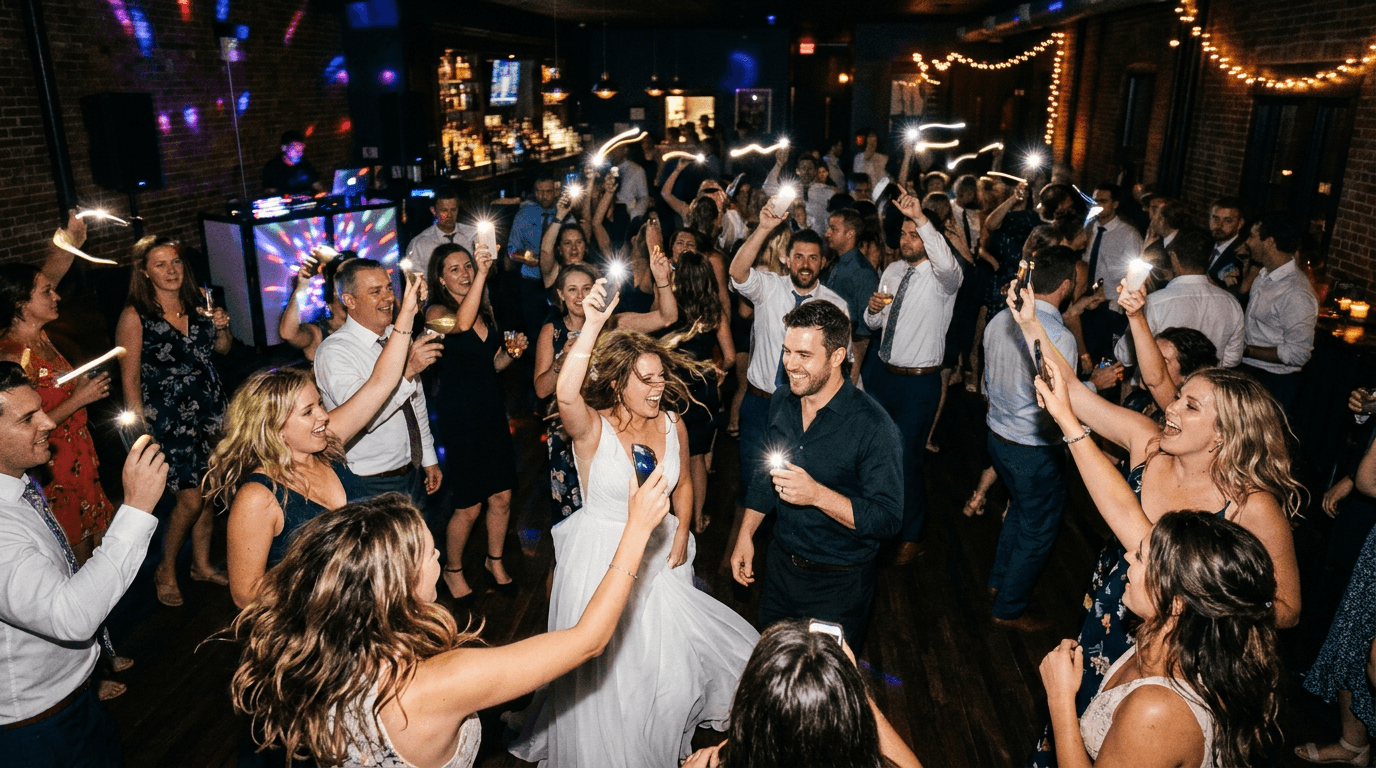
One QR code away
Every seat in the room is holding a camera. Give them somewhere to put it.
No subscriptions. One private home for every memory your guests share.