Printique vs. Artifact Uprising: Which Wedding Album Should You Order?
By Snap Wedding Team · September 20, 2026 · 10 min read
The short answer
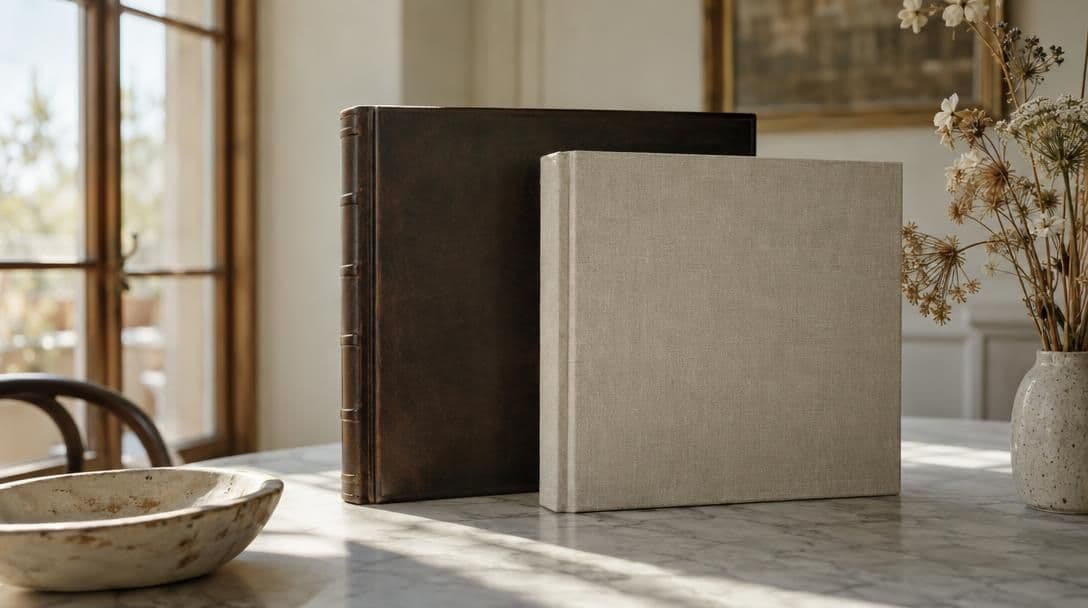
Choose Printique if you want silver-halide photographic paper, a true flush-mount album with a board core, or a leather cover that arrives in a magnetic presentation box - and you are comfortable designing in a more lab-like editor. Choose Artifact Uprisingif you want a plant-based linen cover with foil stamping, a cleaner consumer design tool, and an album that already looks like the object on every Pinterest board labeled “heirloom.” They overlap more than Shutterfly and Artifact Uprising do. The gap is paper process, page construction, and aesthetic, not quality in the abstract. For the wider field, start with our comparison of the major wedding album makers.
What each one actually sells
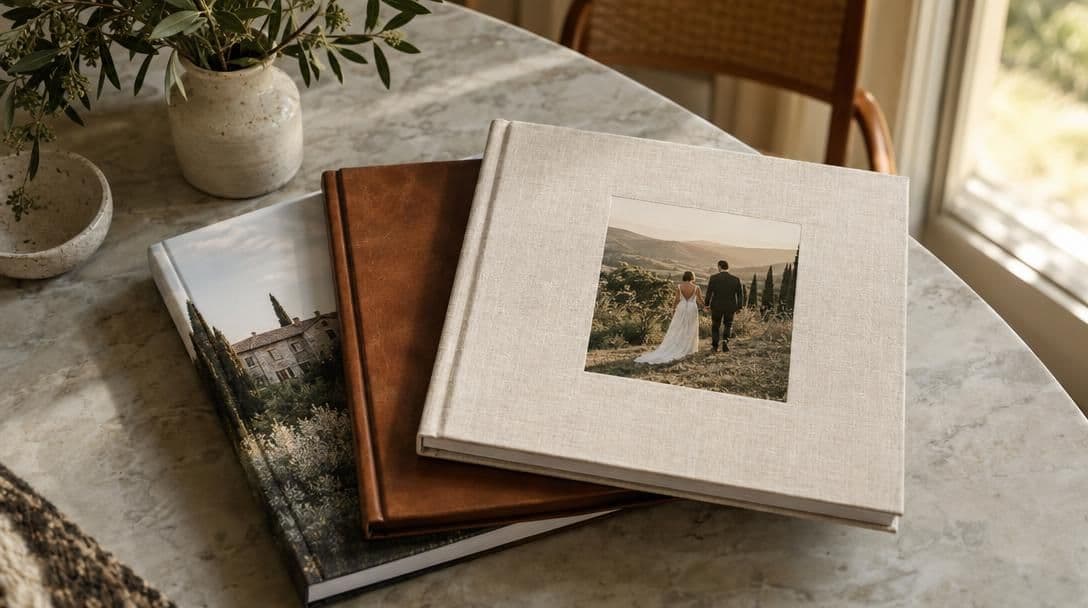
Artifact Uprising's wedding-facing line is the Layflat Photo Album (linen, from $159, 20 pages included) and the Signature Layflat (linen or leather, from $239). Extra pages are $5.25–$7.00 each on the standard layflat and $5.25–$8.25 on Signature, added two at a time, up to 90 pages on the linen album. Paper is Lustre or Superfine matte on a 300 gsm insert. Covers are foil-stamped; there is no photo wrap on the standard linen album (that is a separate, thinner Photo-Wrapped Layflat).
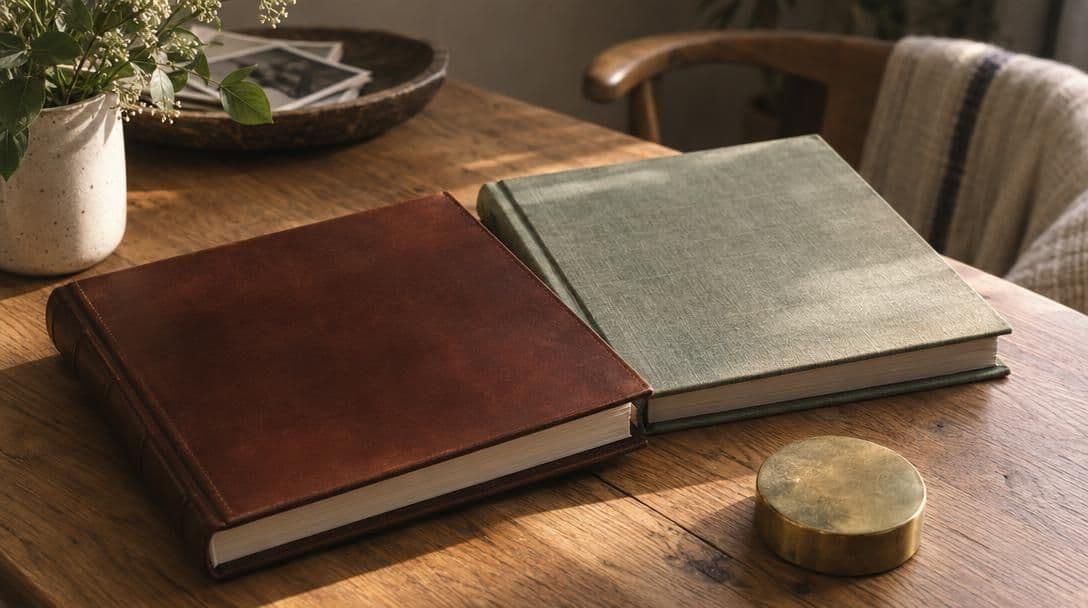
Printique, an Adorama company in Brooklyn, splits the catalog into photo books and premium albums. Books use deluxe layflat binding and start much lower - hardcover from $27.99, fabric $37.99, Leather-Lux $73.99, genuine leather $118.99 on the published book calculator. Albums are the thicker product: flush-mount pages with a substrate, Contemporary Slim (up to 100 pages) or Classic Heavy (up to 50), leather or wrap covers, gilding and rounded corners available, gift box included. Album interiors print on silver-halide Digital C paper. Books also offer silver-halide interiors on the hardcover line. Pickup is available in Brooklyn and at Adorama in Manhattan; they ship to the US and Canada only.
Binding and paper: the real difference
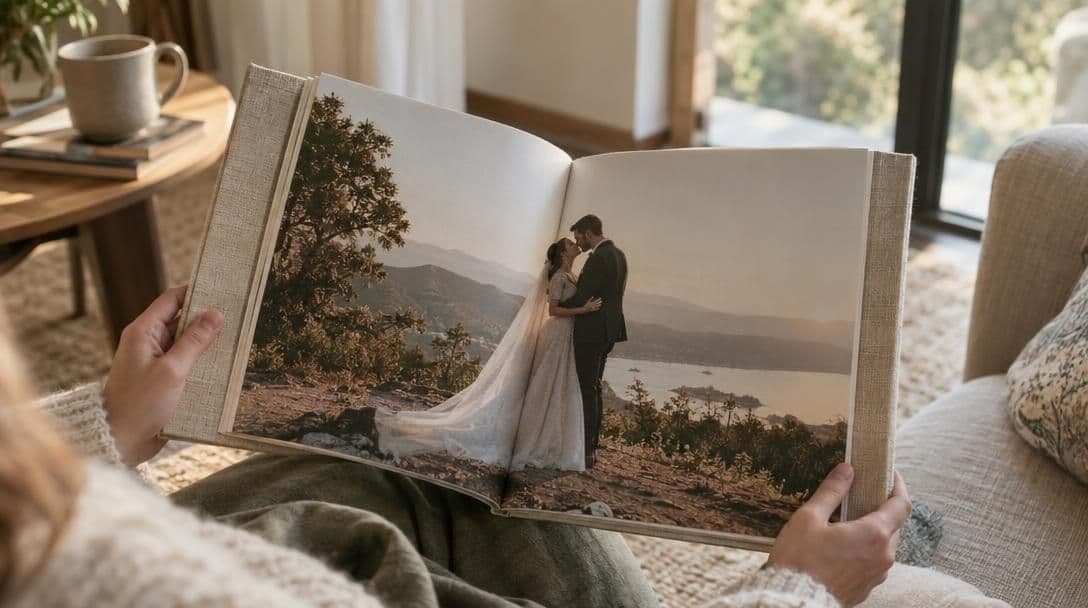
Artifact Uprising describes its layflat pages as flush-mount with a glue sheet and thick insert. They open completely flat. Printique's premium albums are the stricter definition of flush mount: a print bonded to a board core, rigid, not floppy. If you want the photographer-sample heft, Printique's Classic Heavy album is the closer object. If you want a slimmer book that still opens flat, either brand's thinner layflat/slim option will feel more familiar. We unpack the construction in flush mount vs. layflat.
Paper process matters more than most comparisons admit. Printique albums are silver-halide photographic prints. Artifact Uprising prints on Mohawk lustre or eggshell matte. Neither is “fake” - they look different. Saturated, high-contrast galleries usually prefer lustre or silver-halide gloss/luster. Soft, film-like galleries usually prefer matte art paper. Order a sample from both if you can; Printique sells sample kits and Artifact Uprising's paper choice is hard to judge on a screen.
Price, and why extra spreads decide it
A 20-page Artifact Uprising linen layflat starts at $159. A comparable Printique leather album is typically in the high $100s before size and page weight; their book line undercuts that by a lot. Extra pages are where the totals diverge. Artifact Uprising charges $5.25–$7.00 per additional page on the linen album - a 50-page 10x10 is a several-hundred-dollar object before shipping. Printique's book calculator prices extra two-page increments much more cheaply on the book line; the album line is priced like a lab album, not a consumer photo book. Decide page count first. Cover material is the second lever, not the first.
Figures above are list prices from each brand's site as of September 2026. Neither runs Shutterfly-style permanent 40% off, though Artifact Uprising does periodically offer a percentage-off popup. Check the live configurator before you budget.
Design, proofing, and where it ships from
- Design. Both are DIY. Artifact Uprising also offers a paid designer option and a cheap design-review add-on. Printique has autofill, a layout wizard, and video tutorials; there is no full wedding-album design service in the consumer flow.
- Proof.Both show an on-screen preview. Artifact Uprising customers regularly mention a digital proof that can print darker than the screen - that is worth a sample order. Printique's preview is the same kind of online proof, not a mailed press proof.
- Turnaround. Artifact Uprising quotes 5 business days in production for the linen layflat (8 for Signature) plus shipping. Printique emphasizes Brooklyn workshop production and does not publish a single SLA on the album pages; budget a couple of weeks unless you confirm at checkout.
- Origin and shipping.Artifact Uprising's office is in Denver; books print at partner facilities around the US. Shipping is paid (no free shipping), and international duties are yours. Printique prints in Brooklyn, offers local pickup, white-label packaging, and will not ship outside the US and Canada because of damage rates.
Who should choose which
A mother-in-law book is the query that keeps showing up for this comparison, and it is a useful test. If she wants a leather album that feels like a studio product, Printique is the more traditional object, especially Classic Heavy. If she wants a linen coffee-table album with foil names, Artifact Uprising is the one she has already seen in friends' houses. If you are ordering parent copies plus your own, Printique's cheaper book line is a reasonable second copy while you spend the money on one flush-mount album. Before either goes to print, pull guest candids into the pool - a QR code photo gallery on the day is how most couples actually get enough wide shots to justify layflat spreads.
Frequently asked questions
Printique is better if you want silver-halide paper and a rigid flush-mount album, especially leather. Artifact Uprising is better if you want a foil-stamped linen cover and a simpler consumer editor. Quality is close; construction and look are not identical.